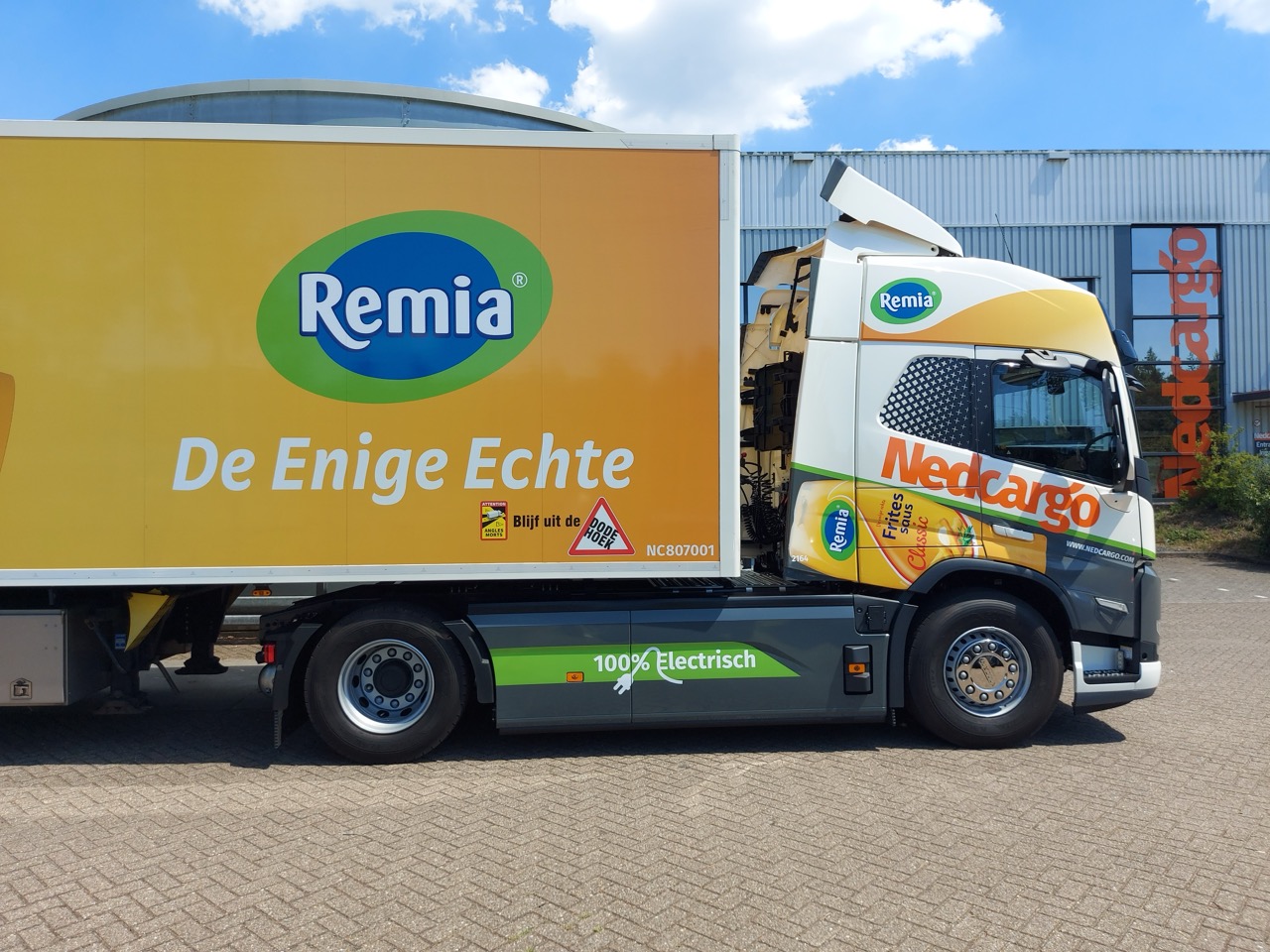
ITG, ZES, and Nedcargo are committed to emission-free inland shipping
By 2050, inland shipping will be CO₂-neutral. Zero Emission Services, Inland Terminals Group, and Nedcargo are demonstrating with a model that this future is beginning.

For decades, inland shipping has been the backbone of the Port of Rotterdam and the European economy. Every year, 140 million tons of dry and liquid bulk, breakbulk, and containers are transported via rivers and canals to the hinterland. It is an efficient and relatively clean mode of transport. Yet, the sector is under pressure.
“Inland shipping must become more sustainable,” says Marnix Vos, project manager at Nedcargo. “The sector has always had an advantage because a lot of cargo can be transported with relatively low fuel consumption. But other modes of transport are catching up. Road transport, for example, is innovating rapidly with electric trucks and more efficient engines. If we do nothing, we will lose ground.” For the logistics service provider, sustainability is a strategic choice.
“Our goal is a ‘wasteless supply chain.’ Emission-free shipping is simply part of that.”
Batteries as fuel
Nedcargo and ITG are sticking their necks out and investing in future-proof inland shipping. In doing so, they have found the perfect partner in Zero Emission Services (ZES), a company with Ebusco, ING, Wärtsilä, and the Port of Rotterdam Authority as shareholders. Together, the partners are taking the lead in further greening inland shipping by converting the container ship Den Bosch Max Groen to battery-electric propulsion for routes between Den Bosch, Moerdijk, and Maasvlakte. The Alphenaar was converted previously; this ship has been operating on ZES technology since 2021.
The beating heart of this innovative technology is the ZESpacks developed by ZES. These standard 20-foot containers are filled with batteries that are charged along major shipping routes using 100% green electricity. Sailing on these swappable batteries is clean, quiet, and emission-free. “Precisely because we use standard containers, we have created a scalable and interchangeable solution,” explains Michael Beemer, CEO at ZES. “As a skipper, you don’t have to wait for the battery to charge. You swap and keep going. That makes this system very practical for shipping. An additional advantage is that the battery can be charged at the most favorable times. Theoretically, it is possible to fully charge the battery in just three hours.”
Watch here as a full battery container is hoisted aboard the MS Den Bosch Max Groen at the ITG container terminal quay in Alblasserdam: